
The Connection Between Mathematics and Mental Illness
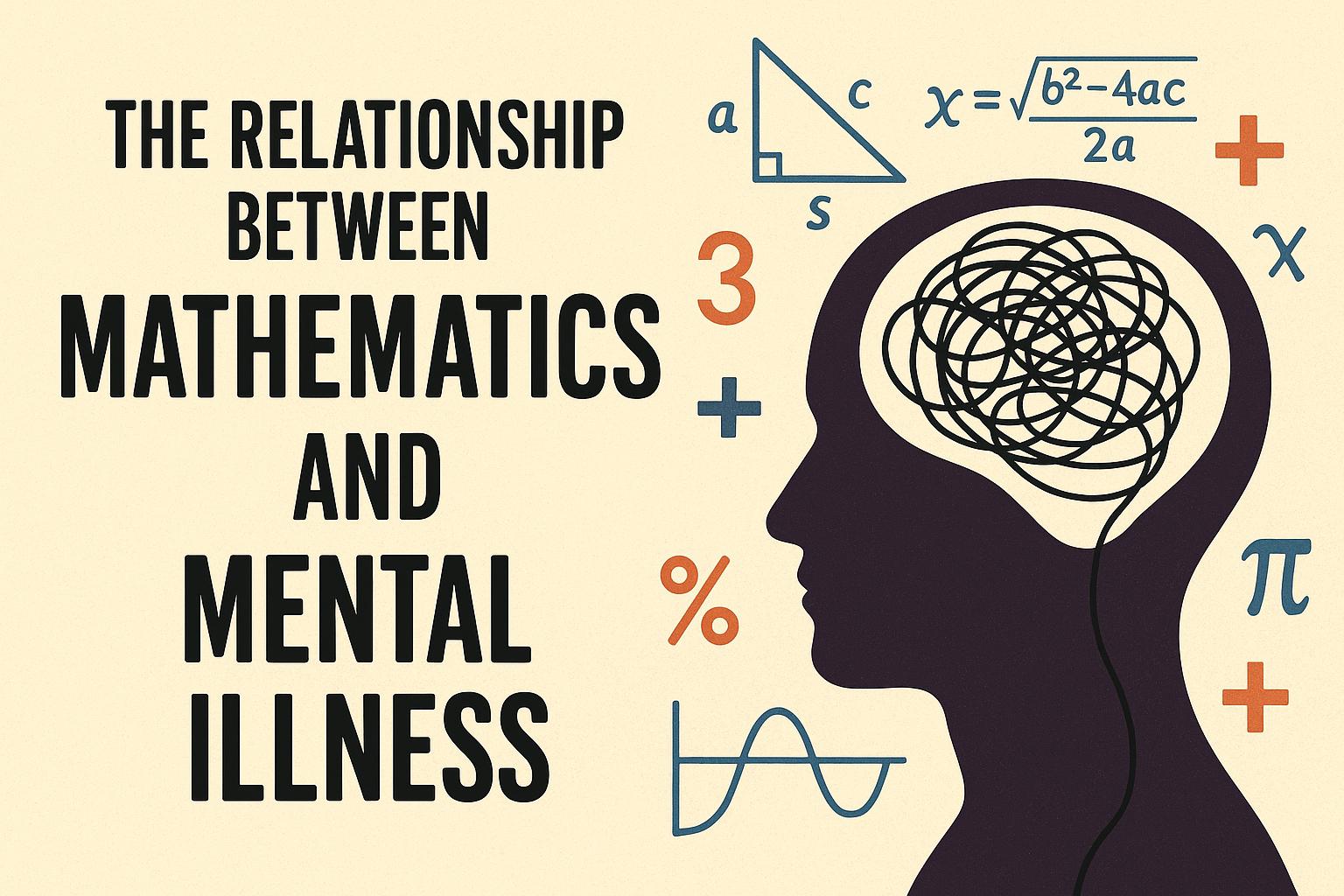
The relationship between mathematics and mental illness is a topic of considerable interest within both the scientific and mathematical communities. This exploration delves into the cognitive and psychological aspects that define how these two distinct areas intersect. The intricate landscape involving mathematics and mental health highlights the delicate balance between cognitive challenge and mental stability, offering insights that bridge science, psychology, and personal experience.
Historical Perspective
History offers a profound view of the link between mathematical prowess and mental health struggles. Many celebrated mathematicians throughout time have encountered significant mental health challenges, indicating a potential connection between the two. At the forefront is John Nash, whose groundbreaking contributions to game theory earned him a Nobel Prize. Despite his professional success, Nash’s battle with paranoid schizophrenia was well-documented, providing a poignant example of genius grappling with mental instability. Another influential figure was Kurt Gödel, recognized for his revolutionary incompleteness theorems. Gödel’s life was marked by deep-seated anxiety and paranoia, which tragically influenced the later years of his life.
These historical accounts underscore a nuanced relationship between extraordinary mathematical minds and mental health difficulties, although it must be noted that such cases do not imply a direct causal link. Rather, they suggest patterns worth exploring to better understand both the nature of creativity and the human brain.
Mathematics as a Cognitive Exercise
Mathematics is fundamentally an exercise in abstract thinking, demanding high degrees of problem-solving, logical reasoning, and cognitive endurance. These aspects make it one of the most challenging intellectual pursuits. The demands inherent in mathematical problem-solving can be a double-edged sword. On the one hand, such cognitive endeavors can enhance one’s mental acuities, honing skills in logic and analytical reasoning. However, these activities can also contribute to mental stress, particularly for those predisposed to mental health issues. The abstract nature of mathematics requires engaging with complex concepts and maintaining intense concentration, which can be taxing on the mind.
Impact on Brain Activity
Engaging with advanced mathematical tasks activates numerous areas of the brain, promoting neural connectivity and flexibility. Research has shown that these cognitive exercises enhance abilities such as spatial-temporal reasoning and memory retention. However, the very processes that bolster cognitive function can also strain mental resources. This phenomenon creates a paradox where the strengthening of cognitive capacity coincides with the potential for increased mental stress. For individuals who are already vulnerable, this heightened pressure can exacerbate underlying mental health issues, underscoring the importance of balance and self-awareness in academic and professional settings.
Psychological Traits and Mathematics
It has been observed that certain psychological traits common among mathematicians, such as perfectionism and obsessive tendencies, can play both beneficial and adverse roles. These traits often drive individuals to passionately and rigorously pursue solutions, pushing the boundaries of mathematical innovation. However, they can also lead to unrelenting pressure and stress, especially when perfectionist standards are difficult to meet. The intensity of focus that aids in solving complex problems might also lead to inflexible thinking patterns or anxiety, contributing to mental health challenges.
Genetic Links
Recent studies have delved into potential genetic components connecting mathematical abilities and mental disorders. Research suggests that genetic predispositions may simultaneously influence cognitive strengths in mathematics and vulnerabilities to certain mental illnesses, such as bipolar disorder or autism spectrum conditions. These dual influences highlight the complexity of genetic factors and their role in shaping cognitive and emotional capacities, calling for further research to map out these intricate genetic landscapes.
Mathematics as a Therapeutic Tool
In an interesting twist, mathematics is also occasionally employed as a therapeutic tool designed to ameliorate certain mental health conditions. The inherently structured and predictable nature of mathematical tasks can provide individuals a much-needed sense of order and control, fostering mental clarity and resilience. Successfully tackling mathematical problems can offer a sense of accomplishment, upliftment this success can bring, providing an escape from chaotic or distraught thought patterns.
Patterns of Thought
The logical and pattern-based thinking central to mathematics can positively influence cognitive processes, encouraging disciplined thought patterns as well in therapies such as cognitive-behavioral therapy (CBT). By reinforcing structured thought processes, individuals may learn to better manage disrupting and negative thoughts, promoting improved mental well-being.
Final Reflections
The relationship between mathematics and mental illness is multifaceted and nuanced. It involves a complex interplay between the cognitive demands of mathematical tasks and the psychological resilience of individuals. While exploring mathematics can place significant cognitive loads that may exacerbate mental health challenges in vulnerable individuals, it also offers a path for cognitive enhancement and therapeutic benefits.
Understanding and navigating this relationship requires interdisciplinary research, integrating insights from psychology, neuroscience, and mathematics. Promoting awareness and understanding of the complexities can help foster more supportive environments for learning and creativity, benefiting both individual mental health and mathematical progress. As we continue to explore these intricate interactions, maintaining a balanced and informed approach becomes crucial, guiding us toward unlocking the full potential of cognitive and mathematical abilities without compromising mental health.
This article was last updated on: January 25, 2026