
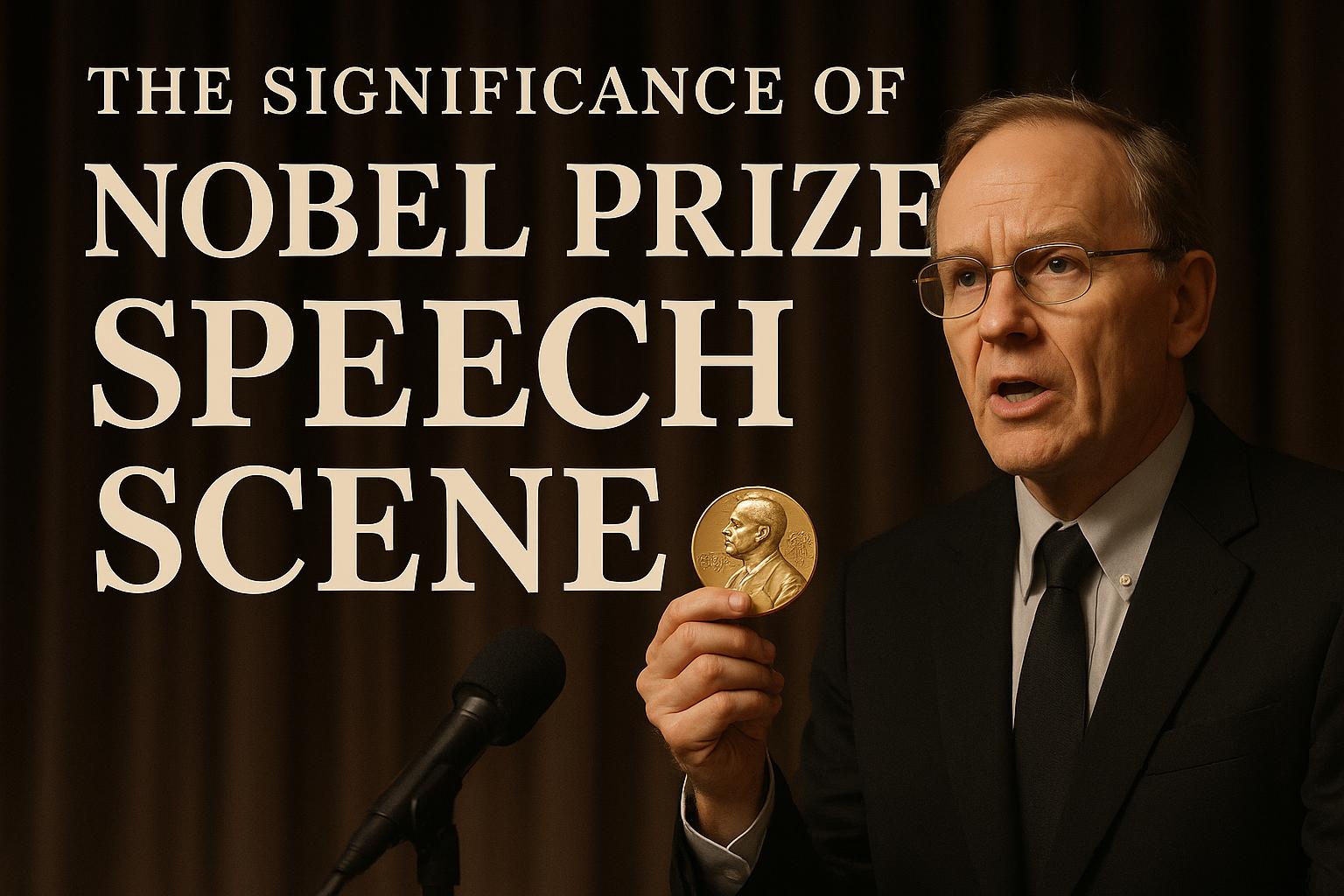
The Importance of Nobel Prize Speeches
The Nobel Prize speeches hold a significant place in the world of academia and beyond. These speeches serve not only as ceremonial acknowledgments of distinction but also as structured reflections on intellectual achievement and responsibility. Delivered by individuals whose work has had measurable global impact, the Nobel lectures provide insight into scientific discovery, literary creation, peace negotiations, and economic thought. Over time, they have become an essential complement to the prize itself, shaping how the public understands major advancements and the individuals behind them.
Beyond the immediate celebration, each address forms part of a documented historical record. Nobel lectures are archived, translated, and studied, preserving the reasoning, uncertainties, and intellectual environments that produced significant breakthroughs. As such, they operate both as retrospective analyses and as forward-looking commentaries on future challenges.
Historical Context
The Nobel Prize, established by the will of Alfred Nobel, has been awarded since 1901. From its inception, the event has aimed to honor those who have conferred the greatest benefit to humankind. Nobel Prize speeches, therefore, become pivotal moments where luminaries articulate their journeys, challenges, and visions. While the format and tone of these speeches have evolved with time, the expectation that laureates will provide a public lecture explaining their work has remained consistent.
In the early twentieth century, Nobel lectures were often technical and narrowly directed toward academic audiences. Over decades, however, the scope broadened. Laureates began situating their discoveries within larger social, political, and philosophical contexts. This shift mirrored a broader transformation in public discourse, where scientific and cultural achievements increasingly intersected with social concerns. As a result, Nobel speeches became platforms not only for explaining results but also for framing them within ongoing global developments.
The Purpose of the Speech
The speech provides an opportunity for laureates to reflect on their work and its impact. It is a chance to express gratitude and to acknowledge those who contributed to their achievements. Research and creative accomplishments rarely result from isolated effort. Nobel lectures often recognize collaborators, mentors, institutions, and even competing researchers whose presence shaped the discipline. In this respect, the speech emphasizes the collaborative nature of knowledge production.
More than ceremonial, the speeches frequently clarify the intellectual processes behind major achievements. Laureates may describe the original question that motivated their work, the methodological obstacles encountered, and the evidence required to confirm or refute their hypotheses. Such explanations allow students, scholars, and practitioners to better understand how high-level research unfolds in practice.
In fields such as physics, chemistry, and medicine, the lectures can function as extended summaries of landmark findings. In literature, they often provide insight into the writer’s aesthetic principles and thematic concerns. In the Peace Prize and Economic Sciences categories, the speeches may outline broader frameworks for policy and cooperation. Through these varied emphases, the Nobel speech becomes a structured articulation of both accomplishment and responsibility.
Cultural and Scientific Impact
Nobel lectures have historically driven interest and investment in various fields by highlighting groundbreaking work. When a laureate explains a complex theory or discovery in a public forum, the field itself receives renewed attention. Universities, funding bodies, and research institutions may recalibrate priorities in response to this exposure. As a result, the speech can indirectly shape research agendas and institutional strategies.
These addresses have catalyzed discussion within both the scientific community and the broader public, fostering a greater understanding of complex topics. For instance, lectures in medicine have clarified the mechanisms of diseases, while discussions in physics have introduced concepts that later become central to technological innovation. Through clear exposition, the lecture can bridge the gap between specialized knowledge and public comprehension.
In literature, the Nobel speech often becomes a landmark essay within the writer’s body of work. Authors may use the opportunity to articulate their understanding of narrative, language, or cultural identity. Such reflections can influence literary criticism and academic study for decades. Similarly, Peace Prize lectures frequently outline guiding principles for conflict resolution, human rights advocacy, or international cooperation, providing reference points for policymakers and scholars.
The cumulative archive of Nobel speeches therefore constitutes a repository of intellectual history. Examined collectively, they illustrate how scientific paradigms shift, how economic theories evolve, and how cultural values are debated across generations.
Public Engagement
While primarily aimed at an audience familiar with the awardee’s field of expertise, Nobel Prize speeches are accessible to the general public. They are frequently published, translated, and disseminated through various media formats, allowing a wider audience to engage with and learn from the content. This accessibility contributes to the broader objective of promoting informed public discourse.
The publication of these lectures encourages scientific literacy and cultural awareness. Readers who may not regularly engage with academic journals gain exposure to foundational ideas directly from leading thinkers. By presenting complex information in a cohesive narrative, the speech reduces barriers between specialists and non-specialists.
Modern communication technologies have further expanded this accessibility. Recorded lectures are available to global audiences, enabling students and researchers from diverse regions to access authoritative explanations of key discoveries. This circulation of knowledge supports international collaboration and strengthens scholarly networks.
For further information about Nobel Prize speeches, you may visit the official Nobel Prize website, which offers access to speeches and additional resources.
Intellectual Responsibility and Ethical Reflection
Another important function of Nobel Prize speeches is the articulation of ethical considerations. Laureates often address the broader implications of their work, particularly in fields where applications may have profound societal consequences. Scientific discoveries can influence public health, environmental policy, defense systems, and economic stability. Consequently, the Nobel lecture may include measured reflections on risk, regulation, and responsibility.
Such discussions highlight the interconnectedness of research and governance. They also reinforce the principle that innovation does not exist independently from its social environment. By acknowledging these dimensions, the speaker situates technical accomplishment within a framework of accountability.
In some cases, the lecture becomes a moment of advocacy, though typically framed in analytical terms rather than rhetorical ones. The platform allows the laureate to underscore the importance of sustained research funding, open collaboration, or peaceful international exchange. These observations can influence not only academic communities but also public institutions and legislative bodies.
Legacy and Continuing Relevance
The enduring relevance of Nobel Prize speeches lies in their dual character as both record and projection. On one hand, they document significant milestones in human knowledge. On the other, they often outline unresolved questions and emerging directions. Students may return to these texts not merely to study past achievements but to identify research opportunities implied within them.
Over time, certain lectures acquire canonical status within disciplines. They are cited, excerpted, and assigned in academic curricula. Their arguments and explanations become reference points in ongoing scholarly debate. In this way, the Nobel speech extends beyond the ceremony itself to become a formative contribution to intellectual life.
The Nobel Prize speech scene remains a vital tradition, melding scholarly achievement with the ethos of public engagement, thereby fostering a deeper connection between the sciences, literature, and society at large.
This article was last updated on: March 26, 2026