
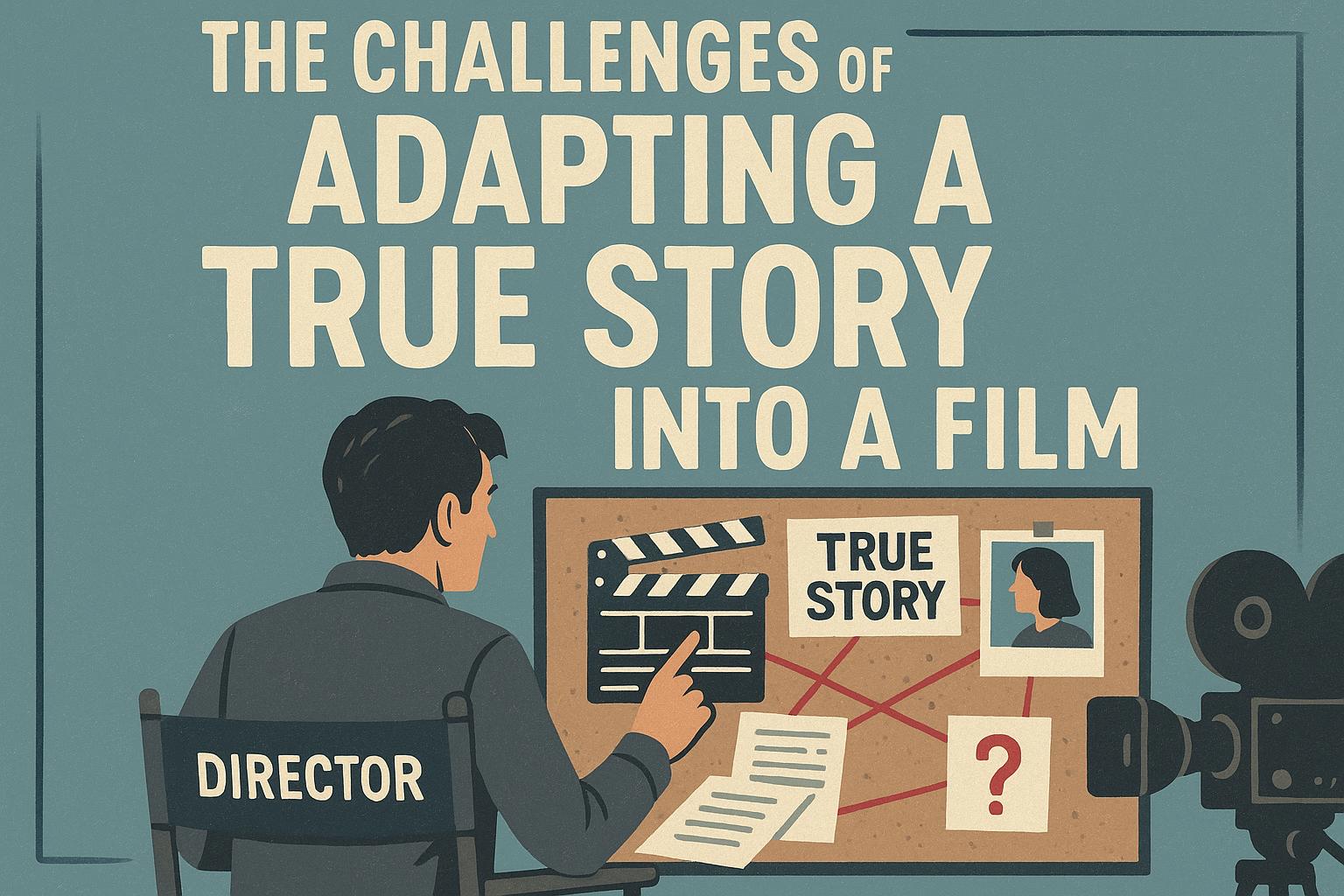
The Inherent Difficulties in Adapting True Stories for Film
When filmmakers undertake the adaptation of true stories for cinema, they encounter a form of material that differs fundamentally from purely fictional narratives. Real events come with established timelines, documented participants, and, in many cases, living individuals whose memories and reputations are affected by the portrayal. Unlike original screenplays, which allow for unlimited creative flexibility, adaptations based on factual events must operate within boundaries determined by historical record, legal frameworks, and public perception. These constraints introduce a distinct set of artistic, practical, and ethical challenges that shape every stage of production.
Films derived from real-life events also occupy a particular cultural space. Audiences frequently approach them with the expectation of learning something about history, society, or notable individuals. As a result, the filmmaker’s responsibility extends beyond entertainment. The work contributes to how events are remembered and understood. This dual function—cinematic storytelling and informal historical interpretation—creates inherent tension between dramatization and documentation.
Balancing Fact with Fiction
One of the central challenges in adapting a true story lies in reconciling factual accuracy with the structural demands of cinematic storytelling. Real life rarely unfolds according to the principles of narrative economy. Events may occur over long periods, involve numerous peripheral figures, or hinge on subtle developments that are difficult to convey visually. In order to create a coherent and engaging film, screenwriters often need to compress timelines, reduce the number of characters, or rearrange sequences of events.
Such modifications are generally intended to enhance clarity and pacing. A complex legal struggle lasting decades, for example, may be condensed into a two-hour narrative that emphasizes key turning points. Similarly, several real individuals who played similar roles in an event may be combined into a single composite character. These strategies allow audiences to follow the narrative without becoming overwhelmed by excessive detail. However, they also introduce deviations from the historical record, which can prompt criticism from scholars, participants, or viewers who value precision.
The difficulty is compounded by the fact that memory and documentation are often incomplete or contradictory. Screenwriters must decide which sources to prioritize and how to handle discrepancies. In doing so, they shape a particular interpretation of events. Even when filmmakers aim for high fidelity, the act of selection—deciding what to include and what to omit—inevitably frames the story in a specific way.
Ensuring Authenticity
Authenticity in film adaptations of true stories involves more than factual correctness. It also requires a credible representation of context, atmosphere, and character behavior. To achieve this, production teams frequently engage in detailed research that encompasses clothing, architecture, speech patterns, and social norms of the relevant period. Historical consultants, eyewitnesses, and subject-matter experts may be brought into the process to review scripts and advise on set design.
Despite extensive preparation, absolute authenticity remains difficult to attain. Practical limitations such as budget constraints, location availability, and casting considerations may restrict how faithfully certain elements can be recreated. Moreover, historical interpretation evolves over time. A portrayal considered accurate at the moment of production may later be reassessed in light of new research or changing societal perspectives.
Another aspect of authenticity concerns performance. Actors portraying real individuals must strike a balance between imitation and interpretation. Excessive mimicry can appear artificial, while excessive reinterpretation may seem disrespectful or misleading. Achieving a portrayal that captures essential traits without devolving into caricature requires careful calibration by both the performer and the director.
Ethical and Legal Considerations
Beyond artistic questions, filmmakers must navigate a complex ethical and legal environment. The rights to tell a particular story may belong to individuals, families, or estates. Securing these rights often involves negotiation and contractual agreements that define how the material can be used. In some cases, access to personal archives, interviews, or unpublished documents is contingent upon such agreements.
Legal considerations extend to issues of defamation and privacy. If a film depicts real individuals—particularly those who are still living—its portrayal must avoid causing unjustified reputational harm. Even when events are part of the public record, dramatization can introduce interpretations that expose producers to legal risk. As a result, scripts often undergo rigorous review by legal teams before production begins.
Ethical considerations may be even more complex. Stories involving trauma, violence, or personal tragedy require a measured approach. Filmmakers must consider how reenacting painful events might affect survivors or relatives. The depiction of sensitive subjects demands restraint and contextual awareness. Decisions about what to portray directly and what to imply can significantly influence whether a film is perceived as responsible or exploitative.
The Impact of Public Perception
Public perception plays a significant role in shaping both the production and reception of films based on true stories. Audiences frequently interpret such films as authoritative accounts, even when disclaimers indicate dramatization. This tendency increases the pressure on creators to maintain credibility. Promotional materials that emphasize the factual basis of a film can further heighten expectations of accuracy.
When viewers identify discrepancies between the film and established records, criticism can emerge quickly. Scholars, journalists, and individuals connected to the events may publicly challenge specific portrayals. In the contemporary media environment, such debates can spread rapidly and influence a film’s commercial performance. Consequently, production companies often engage in strategic communication efforts, explaining the rationale behind narrative choices and clarifying the extent of artistic license taken.
Public discourse around these films can also shape broader cultural conversations about history and memory. A widely viewed adaptation may bring renewed attention to forgotten events or figures, influencing educational and social discussions. This impact underscores the significance of responsible storytelling when dealing with real-world material.
The Creative License Dilemma
The question of creative license remains a persistent topic in discussions about adapting true stories. Film, as a medium, relies on dramatic tension, character development, and thematic coherence. Achieving these qualities sometimes necessitates alterations that diverge from literal accuracy. Supporters of creative flexibility argue that such adjustments can illuminate underlying truths, even if specific details are modified.
Critics, however, contend that deviations risk distorting historical understanding. When audiences lack familiarity with the original events, they may accept the cinematic version as definitive. This dynamic raises concerns about the long-term effects of dramatization on collective memory. The responsibility of filmmakers, therefore, is not only to craft compelling narratives but also to consider how their interpretations might shape public knowledge.
Some productions address this tension by clearly signaling where dramatization has occurred, either through disclaimers or supplementary materials. Others prioritize adherence to documented fact, even if this choice results in a less conventional narrative structure. There is no universally accepted formula; each project requires its own assessment of how to reconcile storytelling objectives with factual integrity.
Conclusion
Adapting true stories for film involves navigating a range of interconnected challenges. Filmmakers must balance narrative clarity with historical accuracy, pursue authenticity while managing practical constraints, and address ethical as well as legal considerations. At the same time, they operate under the scrutiny of audiences who often expect both entertainment and reliable representation. The process demands careful judgment at every stage, from research and script development to casting and post-production. In meeting these demands, filmmakers contribute not only to cinematic art but also to the ongoing interpretation of real events within the public sphere.
This article was last updated on: April 27, 2026